Sciatica Treatment in Burlington: Evidence-Based, Non-Surgical Care

Last Reviewed By: Dr. Cameron Edgar & Dr. Maja Edgar, June 27, 2026

Quick Answer: What Is Sciatica?


Lower back pain in the spine with back ache. health care or medical concept.

Sciatica is not a diagnosis on its own. It is a description of symptoms caused by irritation or compression of the sciatic nerve, the longest nerve in the body. It typically produces sharp, shooting, or burning pain that travels from the lower back or buttock down one leg, sometimes past the knee and into the foot. The most common causes include a herniated or bulging disc in the lumbar spine, degenerative disc disease, lumbar spinal stenosis, or piriformis syndrome. For most people, sciatica responds well to evidence-based, non-surgical care including chiropractic treatment, targeted exercise rehabilitation, and soft tissue therapy. In rare but important cases, sciatica can signal something more serious. If you experience sudden loss of bladder or bowel control, progressive leg weakness, or numbness in the groin or inner thigh, seek emergency care immediately.

What Is Sciatica? Understanding the Condition


The sciatic nerve originates from a collection of nerve roots in the lower lumbar and sacral spine, specifically the L4, L5, S1, S2, and S3 levels. These roots merge to form a single large nerve that travels through the buttock, down the back of the thigh, past the knee, and branches into the lower leg and foot. When any part of this pathway becomes irritated, compressed, or inflamed, pain signals travel along the entire route. That is why sciatica can produce symptoms all the way from your lower back to your toes.

It is worth clarifying a common misconception: many people refer to any lower back pain that travels into the leg as sciatica, but true sciatica specifically involves the sciatic nerve. Other conditions, such as referred pain from a lumbar facet joint or hip pathology, can produce similar patterns without any nerve involvement. This distinction matters because the treatment approach differs. A thorough clinical assessment is the most reliable way to determine what is actually driving your symptoms.

Sciatica also exists on a spectrum. Acute sciatica tends to flare up suddenly, often following a specific movement, lift, or activity. It can be intensely painful but frequently improves within six to twelve weeks with appropriate care. Persistent or chronic sciatica, meaning symptoms lasting beyond twelve weeks, is more complex and often involves a combination of mechanical, movement, and lifestyle factors that need to be addressed together. The good news is that even long-standing cases often respond well to a structured, graduated rehabilitation plan.

How Sciatica Shows Up Day-to-Day: Symptoms and Patterns


Dr. Cameron Edgar performing chiropractic care on a client's back.

Sciatica is one of those conditions where no two people experience it in exactly the same way. The symptoms can range from a dull, persistent ache to a sharp, electric-like shooting pain that can stop you mid-stride. Understanding your specific pattern helps guide accurate assessment and targeted treatment.

Core Symptoms

  • Sharp, shooting, or burning pain starting in the lower back or buttock, travelling down one leg
  • Pain that is typically one-sided, though bilateral sciatica does occur
  • Numbness, tingling, or pins-and-needles in the back of the thigh, calf, or foot
  • Muscle weakness in the leg or foot, including difficulty raising the front of the foot (foot drop in severe cases)
  • A deep, aching discomfort in the buttock that is sometimes confused with hip pain


Aggravating and Easing Patterns

Most people with sciatica find that their pain worsens with prolonged sitting, particularly in low or soft chairs. Bending forward, coughing, sneezing, or bearing down can also increase symptoms, especially when a herniated disc is involved. Standing, walking, or lying down in certain positions often provides relief. Many patients report that walking slowly actually helps, while sitting at a desk for even thirty minutes makes symptoms dramatically worse.

It is also common for symptoms to flare in the morning due to disc hydration and swelling overnight. Some individuals notice that their leg symptoms are worse than their back pain. This is a hallmark of nerve root involvement.

Functional Impact

Left untreated or mismanaged, sciatica can significantly disrupt daily life. Sleep is often affected because finding a pain-free position becomes a challenge. Work that involves sitting at a desk, driving for extended periods, or physical labour can all become difficult or impossible. Exercise and recreational activities, from walking the dog to playing sports, may be avoided out of fear or pain. Unfortunately, this leads to deconditioning and can make recovery slower. At Edgar Family Chiropractic, we work with you to keep you as active as safely possible throughout your recovery, because movement, done correctly, is part of the medicine.

Why Did This Happen to Me? Common Drivers of Sciatica


One of the most common questions we hear is simply: why did this happen? Understanding the contributing factors does not change what you are feeling right now, but it does help you take meaningful steps toward recovery and reduce the risk of recurrence.

Mechanical and Structural Factors

  • Herniated or bulging intervertebral disc (L4/L5 and L5/S1 are the most common levels) putting direct pressure on a nerve root
  • Lumbar spinal stenosis, a narrowing of the spinal canal that reduces space for the nerve roots, more common in adults over 50
  • Degenerative disc disease, gradual age-related changes in disc height and hydration that can reduce foraminal space
  • Spondylolisthesis, a forward slippage of one vertebra over another, which can compress nerve structures
  • Piriformis syndrome, irritation or tightening of the piriformis muscle in the buttock, which runs directly over or through the sciatic nerve in some individuals
  • Bone spurs forming around facet joints and narrowing the nerve exit channels


Lifestyle Contributors

  • Prolonged sitting, particularly with poor lumbar support or a forward-slouched posture
  • Heavy or repetitive lifting with poor mechanics
  • A sedentary lifestyle leading to weakened core and gluteal muscles, which reduces spinal stability
  • Excess body weight increasing mechanical load on the lumbar discs
  • Sciatica is also common during pregnancy, as the growing uterus can place direct pressure on the sciatic nerve and hormonal changes relax ligamentous support


Capacity and Recovery Mismatch

A concept that many patients find helpful is the idea of load versus capacity. Your spine and nervous system have a certain capacity to tolerate physical stress. When the demands placed on them, whether from a single heavy lift, months of poor posture at a desk, or accumulated fatigue, exceed that capacity, symptoms develop. This is not a sign that your spine is fragile or damaged beyond repair. It is a signal that something in the system needs to be addressed. Our role is to help restore that capacity through structured, progressive care.

Red Flags: When to Seek Urgent Care


The vast majority of sciatica cases are mechanical in nature and are safely managed with conservative care. However, there are specific warning signs that require immediate medical attention. These red flags suggest a potentially serious neurological or medical emergency.

Seek immediate medical attention if you experience any of the following:

  • Sudden loss of bladder or bowel control, or new numbness in the groin, inner thighs, or genital region (possible cauda equina syndrome, which is a medical emergency)
  • Rapidly progressing leg weakness or difficulty walking that is worsening over hours or days
  • Sciatica following a significant trauma such as a fall, car accident, or sports injury
  • Symptoms in both legs simultaneously
  • Fever, unexplained weight loss, or night pain that wakes you from sleep and is unrelated to movement (possible infection or tumour)
  • A history of cancer, prolonged steroid use, or immune-suppressing conditions combined with new spinal symptoms


If you are experiencing any of the above symptoms, do not wait for a chiropractic or physiotherapy appointment. Go directly to your nearest emergency department or call 911. For all other presentations of sciatica, our team is here to assess and support you.

How We Assess Your Case


front desk speaking with patient about her first visit

At Edgar Family Chiropractic, treatment always starts with understanding. Before any hands-on care begins, we conduct a thorough assessment to identify the root cause of your symptoms, not just the symptom itself. This allows us to build a plan that is specific to you, rather than applying a one-size-fits-all approach.

History and Symptom Interview

We begin by asking detailed questions about your symptoms: when they started, what makes them better or worse, whether they are improving or progressing, and how they are affecting your daily life. We also review your general health history, any previous spine conditions or injuries, and your work and activity demands. This conversation gives us essential clinical context before we examine you.

Physical and Neurological Examination

Our physical examination evaluates your posture, lumbar and hip range of motion, and areas of tenderness. We perform a neurological screen to assess muscle strength, reflexes, and sensation in the lower extremities. Specific orthopaedic tests, including the Straight Leg Raise, SLUMP test, and Femoral Nerve Tension test, help us determine which nerve roots are involved and how irritated the nerve is. These tests are well-validated clinical tools that guide both diagnosis and treatment planning.

Differential Diagnosis

Part of a responsible assessment is ruling out other causes of leg pain. Hip joint pathology, sacroiliac joint dysfunction, lumbar facet referral, and peripheral vascular conditions can all mimic sciatica. We are trained to identify these patterns and, where appropriate, refer or co-manage with your family physician, orthopaedic surgeon, or another specialist.

Imaging: When It Is and Is Not Needed

Not everyone with sciatica requires imaging. Current clinical guidelines suggest that X-rays or MRI scans are not routinely necessary for new cases without red flags, because many structural findings on imaging, including minor disc bulges, are common in the general population and do not always correlate with symptoms. That said, imaging does have an important role. If your symptoms are not improving with appropriate care, if there are neurological signs of concern, or if we suspect a more serious underlying cause, we will recommend appropriate imaging and can facilitate a referral. We will always explain our reasoning clearly so you can make informed decisions about your care.

Your Personalized Treatment Plan


phase 1 of your personalized treatment plan

Effective sciatica care rarely comes from a single technique applied repeatedly. The most evidence-supported approach is a structured, phased plan that addresses your immediate pain, restores normal movement, rebuilds your physical capacity, and equips you to stay well. Here is how we typically approach care, keeping in mind that your plan will be tailored to your specific presentation.

Phase 1: Calm the Irritation

Reduce nerve sensitization. Gentle manual therapy. Nerve flossing and mobilization. Positioning advice. Load management.

phase 2 of your personalized treatment plan

Phase 2: Restore Motion

Joint mobility work. Lumbar and hip flexibility. Soft tissue release. Begin light loading. Postural re-education.

phase 3 of your personalized treatment plan

Phase 3: Rebuild Capacity

Core and glute activation. Progressive strength work. Movement pattern correction. Return to activity. McKenzie exercises.

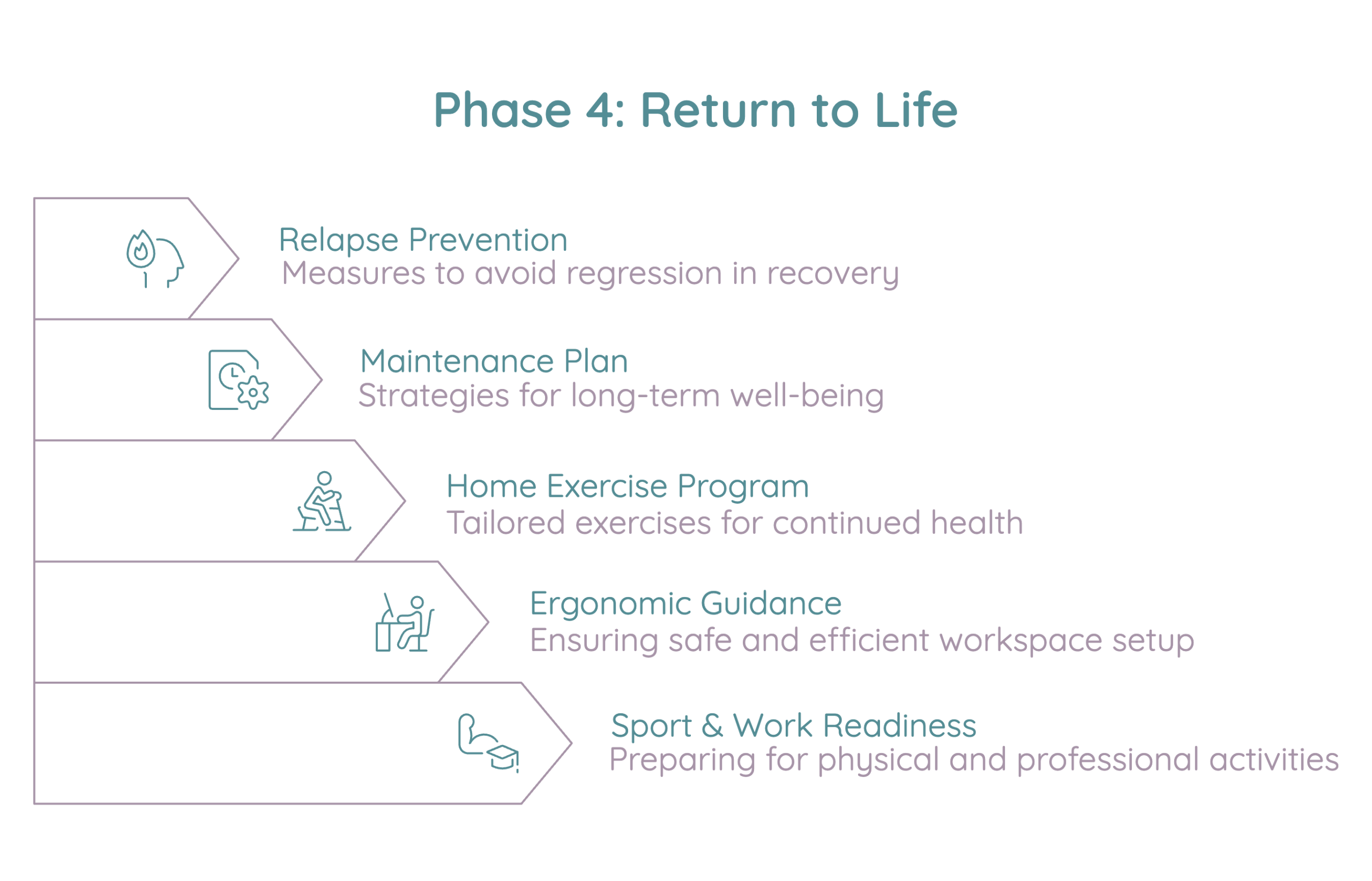
phase 4 of your personalized treatment plan

Phase 4: Return to Life

Sport and work readiness. Ergonomic guidance. Home exercise program. Maintenance plan. Relapse prevention.

Adjunct Technologies (When Clinically Indicated)

Depending on your presentation, we may incorporate additional therapeutic modalities to support your recovery. These are used selectively and only when there is a clear clinical rationale, not applied as a routine add-on to every patient.

  • Spinal Decompression: A non-surgical traction-based treatment that reduces intradiscal pressure and may help retract disc material pressing on a nerve root. Best suited for patients with confirmed disc herniation and nerve root compression who have not responded to initial conservative care.
  • Medical Acupuncture: Fine needles placed at specific points can modulate pain signals, reduce local muscle guarding, and support the nervous system’s natural pain-regulating mechanisms. Backed by evidence for musculoskeletal and nerve-related pain conditions.
  • Soft Tissue Therapy / Active Release: Targeted manual techniques to address muscles, particularly the piriformis, gluteals, and lumbar erectors, that may be contributing to nerve irritation. Also includes fascial work to address mobility restrictions.
  • Shockwave Therapy: May be considered in persistent cases involving associated soft tissue pathology or chronic gluteal muscle involvement.
  • Registered Massage Therapy: Supports muscle relaxation, reduces tension in structures around the sciatic nerve pathway, and can meaningfully improve comfort during the acute and sub-acute phases.


A Note on Treatment Selection

Not every modality is right for every case, and more treatment is not always better treatment. Your care plan will be based on what your assessment findings support, not a standard protocol. We will always explain what we are doing, why we are doing it, and what results we expect to see. If you are not making progress as expected, we reassess and adjust. That is part of evidence-based care.

What the Research Says: An Evidence Snapshot


We believe in being transparent about what the evidence supports. Below is a plain-language summary of key research and guidelines relevant to sciatica care. We are sharing what the best available evidence currently suggests, along with its limitations.

  • Cochrane Systematic Review — Spinal Manipulative Therapy for Acute Low Back Pain (Rubinstein et al., 2019) Spinal manipulative therapy produces small but meaningful short-term improvements in pain and function compared with other recommended therapies for acute low back pain and associated leg symptoms. Applies to adults with acute and subacute low back pain, with some evidence extending to sciatica presentations. Most included trials had moderate risk of bias, and effect sizes are modest rather than dramatic.
  • Clinical Practice Guideline — ACP Guidelines on Low Back Pain (Qaseem et al., 2017) Non-pharmacological approaches, including spinal manipulation, exercise, and acupuncture, are recommended as first-line treatment for acute, subacute, and chronic low back pain. Applies to adults with all durations of low back pain, including radicular presentations. Guidelines are periodically updated, and individual presentation always governs treatment selection.
  • Randomised Controlled Trial — Exercise Therapy for Disc Herniation with Radiculopathy (Lewis et al., 2020) Directional preference exercises (McKenzie Method) combined with manual therapy significantly reduced leg pain and disability compared to passive care alone over twelve weeks. Applies to adults with confirmed L4/L5 or L5/S1 disc herniation producing sciatica. Follow-up period was short, and outcomes at one year are less well characterised.
  • Systematic Review — Acupuncture for Sciatica (Ji et al., 2015, updated literature to 2022) Acupuncture produces clinically significant short-term pain relief and functional improvement for sciatica versus sham or no treatment, with a moderate effect size. Strongest evidence is for adults with lumbar nerve root compression of four or more weeks duration. Heterogeneity in study designs limits pooled conclusions, and long-term outcomes need further study.
  • Evidence Review — Natural History of Sciatica (Peul et al., BMJ 2007 plus follow-up data) Approximately 60 to 70 percent of patients with acute sciatica improve significantly within twelve weeks regardless of treatment. However, structured care improves the speed of recovery and reduces the likelihood of chronicity. This data does not support a “wait and see only” approach when function and quality of life are significantly impaired.

Case Study: From Shooting Leg Pain to Back at the Gym


Downloaded File #: 2058801593 Stressed businessman standing up from office desk suffering from intense lower back pain. Male corporate worker touching his back in pain due to long sitting hours.

The following is a de-identified, illustrative case based on the types of presentations we commonly see at Edgar Family Chiropractic. It is not a guarantee of outcome. Individual results vary based on severity, duration, and adherence to the care plan.

Patient Profile: 44-year-old male. IT project manager, primarily desk-based, eight to ten hours per day seated. Recreational hockey twice per week, occasional gym use. Chief complaint: sharp, shooting pain from the right lower back through the buttock and into the calf and foot, with numbness in the right outer foot for three weeks. Previous treatment: over-the-counter ibuprofen with partial relief, no prior chiropractic or physiotherapy care for this episode.

Baseline Limitations

  • Could not sit for more than twenty minutes without significant pain increase
  • Sleeping was disrupted, as he was unable to find a comfortable position
  • Stopped playing hockey due to pain and fear of making it worse
  • Driving to work (thirty minutes) was causing 7/10 pain by arrival
  • Reported feeling anxious about whether this would require surgery


Assessment Findings

  • Positive right Straight Leg Raise at 45 degrees with reproduction of leg symptoms
  • Reduced lumbar flexion and right lateral bending
  • Neurological screen: mildly reduced right S1 sensation over outer foot, reflexes intact
  • Trunk flexion reproduces and extends symptoms, extension provides partial relief
  • Diagnosis: Right-sided L5/S1 nerve root irritation, consistent with disc herniation with radiculopathy
  • No red flags identified; imaging deferred pending clinical response


Treatment Plan: 8 Weeks

  • Frequency: 2x per week for weeks one to four, then 1x per week for weeks five to eight
  • Phase 1 (Weeks 1 to 2): Nerve mobilization (neural flossing), lumbar joint mobilization, soft tissue work to right piriformis and gluteals, patient education on positions of relief, temporary activity modification
  • Phase 2 (Weeks 3 to 5): McKenzie extension exercises introduced, progressive hip and lumbar mobility work, gentle core activation, gradual return to short walks and low-demand activity
  • Phase 3 (Weeks 5 to 8): Progressive lumbar and gluteal strengthening, return-to-sport conversation, ergonomic review of workstation, independent home exercise program established


Milestones

Week 2: Leg pain reduced from 7/10 to 4/10. Sleeping through the night more consistently. Able to sit for 35 to 40 minutes before significant symptoms. Patient reporting feeling more in control.

Week 4: Foot numbness resolved. Straight Leg Raise negative at 70 degrees. Driving no longer causing pain escalation. Returned to easy skating (no contact). Confidence significantly improved.

Week 8 and beyond: Pain 1 to 2/10 on busy days. Full return to hockey. Independent with home exercise program. Workstation ergonomics corrected. Maintenance care plan established (monthly).

Outcome Metrics: Pain reduced from 7/10 to 1/10. Full return to sport and work activity. Sleep fully restored. Neurological signs resolved. Patient confidence and self-management capacity significantly improved.

Maintenance Plan: Monthly chiropractic maintenance visit to monitor lumbar mechanics. Continued independent home exercise program three times per week, approximately fifteen minutes. Scheduled workstation review at six months. Education on early warning signs and self-management strategies provided.

Meet Your Clinician


Dr.Cameron Edgar

Dr. Cameron Edgar

Chiropractor

Dr. Cameron Edgar was born in Edmonton, Alberta and graduated from the University of Alberta with a Bachelor’s degree in Biological and Physiological Sciences. After moving to Toronto to complete his Doctor of Chiropractic degree in 2005, he pursued further postgraduate education in Contemporary Medical Acupuncture from the De Groote School of Medicine at McMaster University.

Certified in the Active Release Technique, Dr. Edgar has a special interest in sports therapy and post-injury rehabilitation. Dr. Edgar believes that education and proper communication are imperative to patient care.

He now lives with his wife Maja in Burlington and in his free time, enjoys playing many different types of sports including basketball, ultimate frisbee, and golf.

Dr.Maja Edgar

Dr. Maja Edgar

Chiropractor

Dr. Maja Edgar immigrated to Canada with her family from former Yugoslavia when she was eleven. She had an interest in health from an early age and was always fascinated by the human body and mind. She went on to complete a degree from the University of Toronto specializing in Biology and Psychology.

Seeking chiropractic treatment herself during her dance training, she realized that this is what resonated with her views of health and well being, and it prompted her to pursue her chosen profession.

She graduated with a Doctor of Chiropractic degree in 2008 and has also completed post-graduate training in Medical Acupuncture from the Michael G. De Groote School of Medicine at McMaster University.

A member of the International Chiropractic Pediatric Association, Dr. Edgar has a special interest in the areas of chiropractic that include pre and postnatal pregnancy care.

From newborn to adolescence to adulthood, Dr. Edgar uses techniques specific to the individual to bring balance and health to the spine.

Dr. Edgar routinely makes recommendations for patients to establish a self-care routine and encourages her patients to be active participants in maintaining their health.

She is currently living in Burlington with her husband Cameron and in her free time enjoys keeping active through yoga, running and swimming.

Adriana Gomez

Adriana Gomez

Registered Physiotherapist

Adriana is a Registered Physiotherapist with the College of Physiotherapists of Ontario with over 20 years of experience in clinical practice. She completed her Masters of Physiotherapy specializing in Sports Injuries, Manual Therapy and Pregnancy. Prior to this, she graduated with a Bachelor’s in Sciences.

Adriana’s passion is to help others achieve their personal goals in recovering from injury. Her main objective is to optimize function and enhance physical performance in patients. She believes that through a comprehensive assessment and a hands-on treatment combined with an individualized exercise program; she and her patients will achieve mutual goals. Education is in each and all of her sessions; so patients have a clear understanding of their rehabilitation process, prevention of future injuries and proper expectations.

In her spare time, Adriana enjoys spending time with her husband, her 12 years old boy and close friends. Outdoor activities, Running, yoga, pilates, crossfit, and reading whenever she can are her passions.

maheen registered massage therapist

Maheen Khan

Registered Massage Therapist
Maheen studied Massage Therapy at Mohawk College, graduating with an Ontario College Advanced Diploma. She has extensive experience working in hospital settings, community health facilities, active living centres, as well as recreational and clinical settings. Maheen’s knowledge and experience led to her having a comprehensive understanding of soft-tissue and muscular concerns and the appropriate therapies for these. Her treatments are tailored to relieve muscular tension, support recovery, and enhance movement and overall physical well-being. Maheen values clear communication, patient comfort, and creating a calm, supportive environment that fosters trust and relaxation. Outside the clinic, she enjoys hiking local trails and spending time with friends and family. Maheen brings an attentive, grounded presence to every session and remains dedicated to delivering high-quality, compassionate care.
lauren Carabott- Naturopathic Medicine Doctor

Dr. Laura Carabott

Naturopathic Medicine Doctor
With a deep commitment to patient-centered, evidence-based care, Dr. Laura Carabott, ND inspires her patients to take control of their health and long-term wellness. Working closely with patients to fully understand their needs, Dr. Laura provides detailed, personalized treatment plans that align with each patient’s unique goals.   Her journey into naturopathic medicine began with a love of sports, fitness, and nutrition, which continue to shape her balanced and sustainable approach to care today. Dr. Laura completed her B.A. Honours Specialization in Kinesiology at Western University before earning her Doctor of Naturopathy degree from the Canadian College of Naturopathic Medicine (CCNM). Prior to becoming a naturopathic doctor, she worked as a personal trainer, where she developed a deep appreciation for the connection between physical health, mental well-being, confidence, and quality of life. With a strong foundation in exercise science and clinical nutrition, Dr. Laura helps patients navigate the confusion often created by conflicting health, nutrition, and fitness advice online. She is passionate about assisting patients with their food choices and guiding them to move and fuel their bodies in effective ways that are supportive of their lifestyle and individual goals. Today, Dr. Laura works with patients to uncover and address the root causes of their health concerns through comprehensive assessments, laboratory testing, nutrition and lifestyle counselling, and evidence-based care. She has a special focus in metabolic, hormonal, and reproductive health, supporting concerns such as insulin resistance, cholesterol and blood sugar management, high blood pressure, thyroid dysfunction, weight management, fatigue, stress, burnout, mental health, digestive concerns, and healthy aging. While she has a particular passion for supporting women’s health — including PCOS, PMS/PMDD, endometriosis, irregular or painful cycles, and perimenopause/menopause — she also works with both men and women seeking to optimize their energy, metabolism, body composition, and overall well-being. Dr. Laura has obtained her prescribing license through the College of Naturopaths of Ontario (CONO), allowing her to incorporate additional therapeutic options where appropriate, including vitamin injections (Vitamin D & B12), bio-identical hormone therapy (BHRT), and natural desiccated thyroid (NDT) as part of an integrative treatment plan. Rooted in empathy, education, and collaboration, Dr. Laura creates a supportive environment where patients feel heard, empowered, and confident throughout their healthcare journey.
Devin Ong- Registered Massage Therapist

Devin Ong

Registered Massage Therapist
Devin grew up in Burlington and studied at Mohawk College, where he first obtained his physiotherapy and occupational therapy licenses before later completing the Massage Therapy program. Devin’s passion for health care began in high school when he dislocated his shoulder during sports. Going through the rehabilitation process opened his eyes to the importance of anatomy, recovery, and compassionate care, and inspired him to help others in similar situations. Devin uses a range of techniques including deep tissue massage, sports massage, cupping and joint mobility techniques. Devin strongly encourages home care and believes consistent stretching and exercise are just as vital to maintaining a healthy body as massage itself. In his free time, he stays active by playing basketball, hiking, going to the gym, and rock climbing. Devin loves trying new things and traveling the world!

What Our Patients Are Saying

Free Download: Your Sciatica Recovery Guide


pdf graphic for download

Not sure where to start? Download your free Sciatica Recovery Guide.

Inside you will find:

  • A plain-language explanation of sciatica and what drives it
  • The three positions of relief most people with sciatica benefit from immediately
  • Five clinician-recommended exercises to begin your recovery at home
  • A red flag checklist to help you know when to seek urgent care
  • What to expect at your first chiropractic visit

No email required. No obligation. Just helpful, evidence-informed information from our team.

Download Your Free Guide

Book Your Assessment in Burlington


What Your First Visit Looks Like:

  1. Comprehensive health history review (arrive ten minutes early to complete your intake form, or download it from our website in advance)
  2. Physical, orthopaedic, and neurological examination
  3. Clear explanation of your findings and diagnosis in plain language
  4. Personalised care plan discussion — your goals, your timeline, your questions answered
  5. Treatment begins at the first visit in most cases
  6. Direct billing available for most extended health insurance plans

Edgar Family Chiropractic 399 Pearl Street, Burlington, Ontario | 289-337-1202 Monday to Tuesday: 8AM to 8PM | Wednesday to Thursday: 8AM to 7PM | Friday: 7AM to 6PM | Saturday: 9AM to 1PM

Book Your Assessment Today

Medical References


Reviewed by: Dr. Cameron Edgar, DC. Doctor of Chiropractic. McMaster University Contemporary Medical Acupuncture. Certified in Active Release Technique. Last reviewed: May 2026 Next scheduled review: May 2027

This page is intended for informational purposes and does not constitute medical advice. If you are experiencing symptoms consistent with sciatica, please consult a qualified healthcare provider for an individualized assessment.

References

Rubinstein SM, de Zoete A, van Middelkoop M, et al. Benefits and harms of spinal manipulative therapy for the treatment of chronic low back pain: systematic review and meta-analysis of randomised controlled trials. BMJ. 2019;364:l689.

Qaseem A, Wilt TJ, McLean RM, et al. Noninvasive treatments for acute, subacute, and chronic low back pain: a clinical practice guideline from the American College of Physicians. Ann Intern Med. 2017;166(7):514-530.

Lewis RA, Williams NH, Sutton AJ, et al. Comparative clinical effectiveness of management strategies for sciatica: systematic review and network meta-analyses. Spine J. 2015;15(6):1461-1477.

Ji M, Wang X, Chen M, Shen Y, Zhang X, Yang J. The efficacy of acupuncture for the treatment of sciatica: a systematic review and meta-analysis. Evid Based Complement Alternat Med. 2015;2015:192808.

Peul WC, van den Hout WB, Brand R, Thomeer RT, Koes BW. Prolonged conservative care versus early surgery in patients with sciatica caused by lumbar disc herniation. BMJ. 2008;336(7657):1355-1358.

Koes BW, van Tulder M, Peul WC. Diagnosis and treatment of sciatica. BMJ. 2007;334(7607):1313-1317.

Ropper AH, Zafonte RD. Sciatica. N Engl J Med. 2015;372(13):1240-1248.

Valat JP, Genevay S, Marty M, Rozenberg S, Koes B. Sciatica. Best Pract Res Clin Rheumatol. 2010;24(2):241-252.

Canadian Chiropractic Guideline Initiative (CCGI). Clinical practice guideline for the management of acute low back pain. 2021. chiropracticguidelines.ca.

Nijs J, Apeldoorn A, Hallegraeff H, et al. Low back pain: guidelines for the clinical classification of predominant neuropathic, nociceptive, or central sensitization pain. Pain Physician. 2015;18(3):E333-346.

Frequently Asked Questions About Sciatica


How long does sciatica typically last?

For most people with acute sciatica, symptoms improve significantly within six to twelve weeks with appropriate care. Individual recovery timelines vary depending on the cause, the severity of nerve irritation, and how quickly you start treatment. Cases involving significant disc herniation or spinal stenosis may take longer to resolve. Persistent or chronic sciatica, meaning symptoms lasting beyond twelve weeks, is less predictable but still very treatable. Starting care sooner generally leads to faster, more complete recovery.

Is sciatica a serious condition? Can it be cured?

For the vast majority of people, sciatica is not dangerous and does not require surgery. It is a painful, often disruptive condition that responds well to evidence-based conservative care. Many patients reach full resolution of symptoms, while others manage occasional flares with a good home program and periodic maintenance care. The key is identifying the underlying cause and addressing it systematically, rather than just managing the pain in the short term.

What is the difference between sciatica and piriformis syndrome?

Both conditions involve the sciatic nerve and produce similar symptoms, including pain in the buttock and down the leg, which is why they are frequently confused. True sciatica originates in the lumbar spine, where nerve roots are compressed by a disc, bone spur, or narrowed canal. Piriformis syndrome occurs when the piriformis muscle in the buttock compresses or irritates the sciatic nerve at the level of the hip. The distinction matters for treatment: piriformis syndrome often responds better to targeted soft tissue release, stretching, and hip strengthening rather than the lumbar-focused approaches used for disc-related sciatica. Our assessment is designed to differentiate between these presentations.

Can I exercise if I have sciatica?

In most cases, yes. Staying as active as possible within your tolerance tends to lead to better outcomes than complete rest. The type and intensity of exercise matters. High-impact activities, heavy lifting, and prolonged forward bending tend to aggravate disc-related sciatica, while gentle walking, directional exercises, and progressive strengthening are usually beneficial. We will give you specific guidance based on your assessment findings, so you are not left guessing what is safe and what to avoid.

Do I need an MRI before starting treatment?

Not necessarily. For new cases of sciatica without red flags, clinical guidelines suggest that imaging does not typically change initial management and is not required before starting conservative care. Many people have disc changes visible on MRI that are not causing any symptoms, and conversely, significant nerve irritation can be present without dramatic imaging findings. If your symptoms are severe, progressing neurologically, or not responding to a reasonable course of care, we will recommend appropriate imaging and can help coordinate that process.

Will I need surgery for my sciatica?

The majority of people with sciatica do not need surgery. Research consistently shows that most cases improve with conservative care, including chiropractic treatment, physiotherapy, and exercise rehabilitation, over eight to twelve weeks. Surgery is generally considered only when conservative care has been exhausted, when there is significant and worsening neurological deficit, or in emergency situations such as cauda equina syndrome. If we ever assess your case and believe surgical consultation is warranted, we will tell you clearly and help facilitate an appropriate referral.

Can sciatica come back after treatment?

Yes, recurrence is possible, particularly if the underlying contributors (posture, movement habits, core strength, workplace ergonomics) are not addressed as part of the recovery plan. This is why we focus on building your capacity and giving you the tools to maintain your own spinal health, rather than simply reducing your immediate pain. Many patients continue with periodic maintenance care to catch problems early and maintain the gains they have worked for.

Does chiropractic care hurt if I have sciatica?

Treatment is always adapted to your tolerance and comfort level. During an acute flare, we use very gentle techniques, including nerve mobilization, soft tissue work, and carefully selected joint mobilization, rather than forceful manipulation. As your irritation calms down and your mobility improves, treatment can progress accordingly. We will always explain what we are doing before we do it and check in with you throughout. If something does not feel right, tell us and we will adjust the approach.